Expansion card PCW Mini for Amstrad PCW by Habi Soft
-The PCW Mini expansion card by Habi Soft let you add more features on an Amstrad PCW computer :
- sound and music DK'Sound, TurboSound and DAC
- two joysticks
- HDMI output
- four colour modes

The PCW Mini expansion card by Habi Soft let you add more features on an Amstrad PCW computer :

The weather is gloomy, with no sun at all. There's not much joy left in your heart, but maybe I have the solution for you: just watch the video the Amstrad CPC for Noobs by Nicolas PREIRE below, and maybe a ray of sunshine will appear behind you.
Felisuco has made at the start of October 2025 an interview of Mark Eric Jones who is one of the engineer of the Amstrad CPC and PCW. The interview is in spanish but as usual there is a translation possible on Youtube.
And as a bonus, a short video by Felisuco on the best Dandanator possible.
Abalore has a project he is working since September 2024 : the Abatape.
It is using an Arduino Nano ATMega328p@16 Mhz, a 700 mAH battery for about 24 hours of use, a SD reader and an OLED screen. It is especially able to detect the two motors making a real taping moving the magnetic band so it can support multi loading. Someone did suggest to add writing support to create new tape files. The Abatape supports of course the Amstrad CPC (.CDT) but several other computers as it is based on a Maxduino firmware :
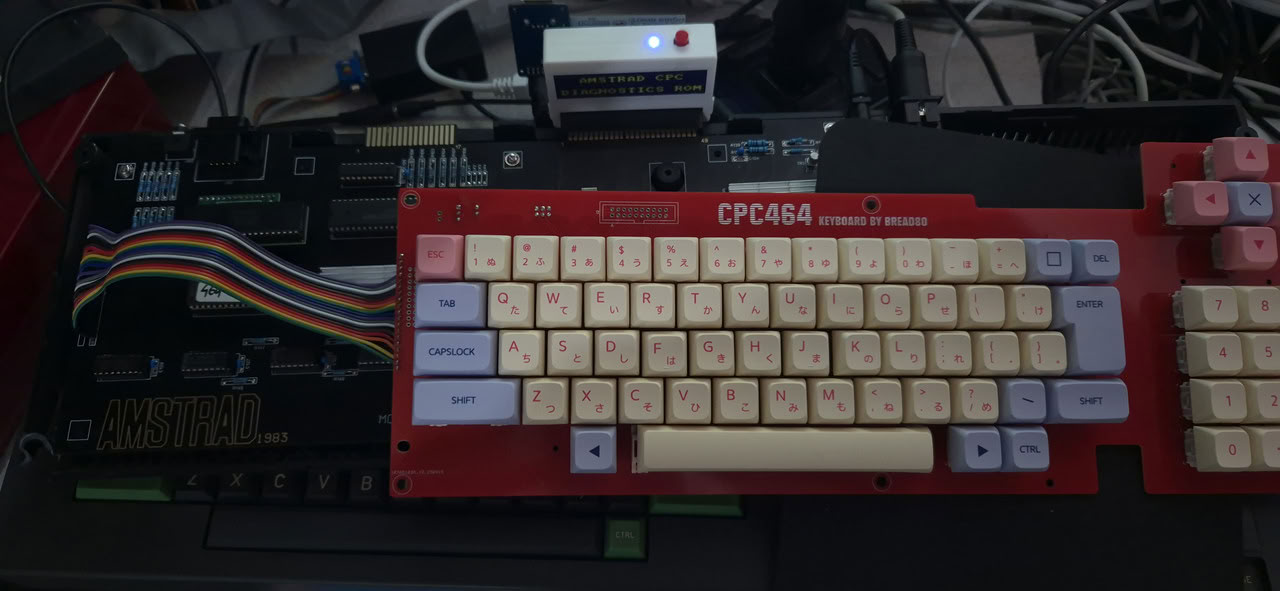
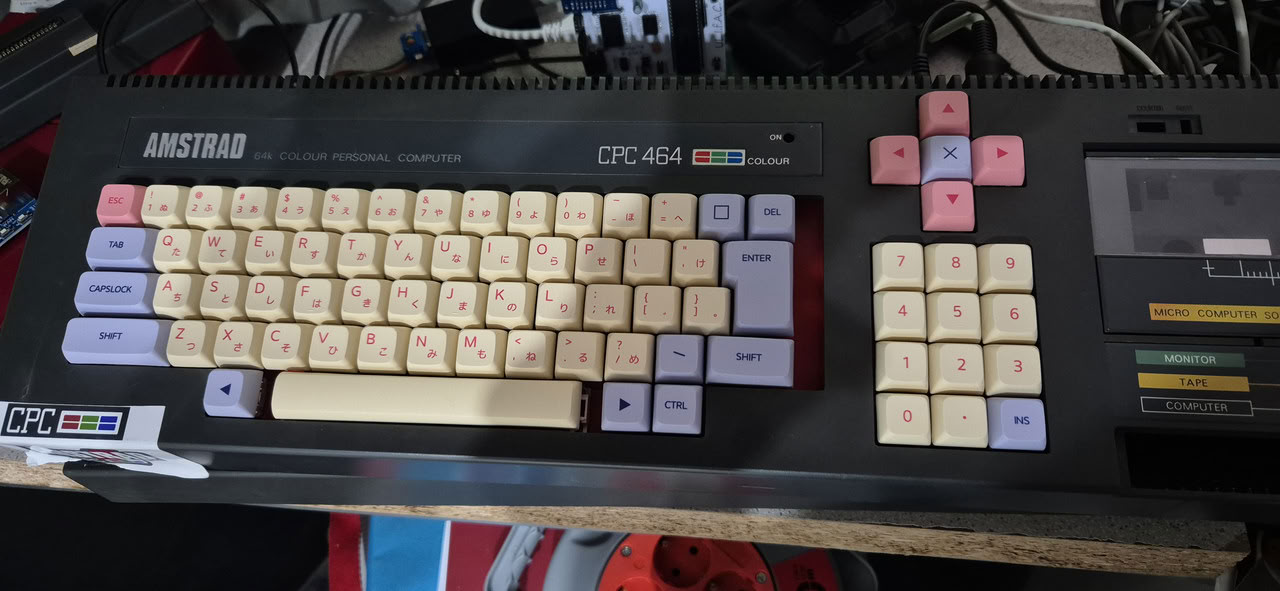
Vous souhaitez un clavier mécanique pour remplacer celui d'origine sur un Amstrad CPC 464 ? Alors Bread80 a ce qu'il vous faut avec toutes les informations sur la carte disponible sur Github.
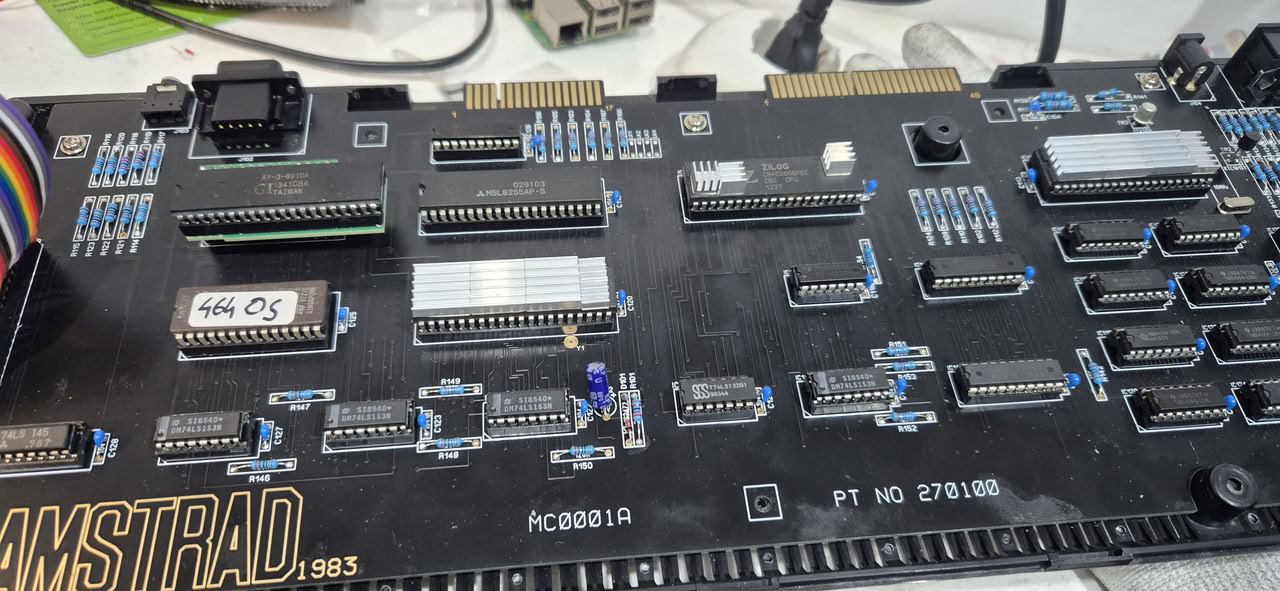
In the same CPCWiki's thread, Salvogendut is showing his replica of an Amstrad CPC 464 main board with Bread80's mechanical keyboard. This replica of the Amstrad CPC 464 main board comes from Bob's Bits site on Tindie (out of stock sadly). But this is also in stock this time a replica of the Amstrad CPC 6128 main board. You will find below three photos of Salvogendut's keyboard.


The last PC released in 1996 by Amstrad was the Integra PC/TV with a 486 DX2 (80 ou 100 Mhz) or pentium (75 à 133 Mhz) processor, 8 Mb of RAM (up to 128), 540 Mb hard disk (up to 1 Tb), a CD-ROM drive and especially a TV Tuner. Windows 95 was installed on the Integra PC/TV. You can download the brochure and specifications on Amstrad web site (or here locally). You can see below a video of the Amstrad Integra PC/TV by Nostalgia Nerd.
Duke stops making the M4 wifi board after almost 1500 boards. He explains it on his web site. I want to thank him personnally as I am the happy owner of his board since years, it is still useful to me. Thanks for all these years of making board and supporting it with new firmwares and answering user on CPCWiki.
It could be an end but it is in fact a new start as Duke has released on Github all needed informations so at least for a start two people will make new boards :
The XiAleste by h2w is a recreation with modern components of an upgraded Amstrad CPC 6128 presented on Hackaday (the sound is upgraded notably). The PCB of the XiAleste is available as is the FGPA code source of the XiAleste both on Github. You can read informations on the XiAleste on CPC Wiki.
You will find below informations from 2019 about the Aleste 520EX which inspired the XiAleste.
The Aleste 520EX is a russian clone of the Amstrad CPC and the MSX. It works not with AMSDOS but with the MSX DOS (see this russian site in english). There was already a thread about the Aleste 520EX on CPCWiki, but this time Sebastian Blanco is talking about the Aleste kit he just bought. Finally he isnt the only one in the Amstrad CPC community to have one. If you are interesting it's seems to possible to buy one kit by writing to tetroid at inbox ru like Sebastian did.
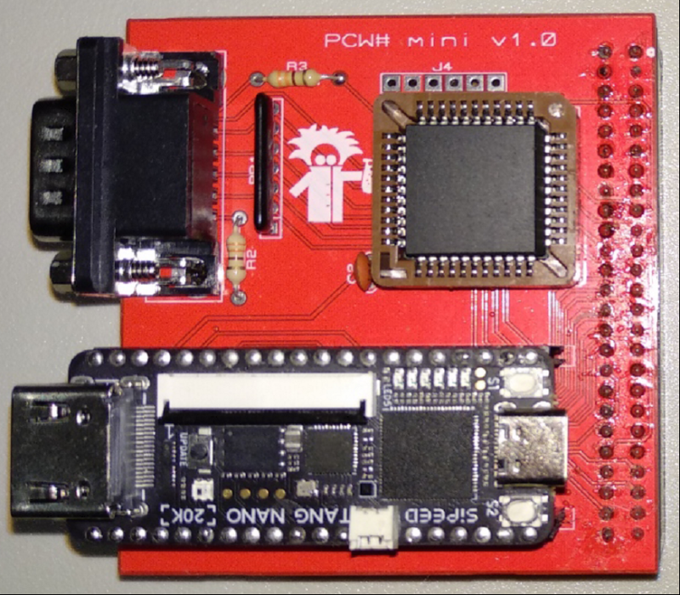
You can see a youtube video of an Aleste 520EX running the Phortem demo by Condense (and MSX games at the start of the video).
A modified version of Caprice32 permits to emulate at least in part the Aleste 520EX.
First read the article on Mark Eric Jones who is the engineer behind the conception of the Amstrad CPC and PCW then list to the spanish interview below done by Felisuco.
A third video of the PicoCPC card by Rodrik Studio and FreddyV in its almost final version
You will be able to see two interviews of Lord Alan Michael Sugar (if you are in U.K., otherwise you will have to use a VPN) about :
Seen by Maitrejoe GGP, you can buy on RetroBoxes some brand new old packing boxes for the Amstrad CPC 464+, 6128+ and GX4000 console.
A video by Lee COOK about the story of the Trojan Phazer for the Amstrad CPC+ and the GX4000 console.
But why is this PC sound card interesting? In fact, they are the sound chip twice on the board : AY-3-8913, yes a version derived from the AY-3-8910. The Amstrad CPC is using the AY-3-8912 variant also used by the MSX (or its Yamaha variant the YM2149F), ZX Spectrum, Atari ST and Oric. The PicoMEM card from FreddyV supports this Mindscape Music Board card since the 26th May 2025 firmware.
The Mindscape Music Board (video by The Oldskool PC) which appeared in 1986, a year before the Adlib sound card in 1987, which became a standard, followed by another standard with the Sound Blaster cards (1989). Only 2,000 cards were created at the time, and only four are believed to still exist today. The Mindscape Music Board was sold with the Bank Street Music Writer editing software, written by Glen Clancy, in two editions (one for the Tandy 1000 and PC Junior with just the software, and the other with a physical card for all other PCs with an 8-bit ISA card). The software was intended to be a word processor for music with 6 channels for notes and percussion, with octave changes, volume, envelope, and other features, with official music notation that could, of course, be printed. No MS-DOS game apparently supports this card due to its rarity, it losts foot when the Sierra company pushed the Adlibe sound card and the MIDI synthesizer Roland MT-32.
Ian Scott has released a new firmware v3.1.0 for his ISA card PicoGUS which supports the sound card Gravis Ultra Sound (and much more).
Since v3.0, it also supports CD-ROM emulation ! The new firmware can be downloaded on Ian Scott's Github.
For more news, Go to home page